
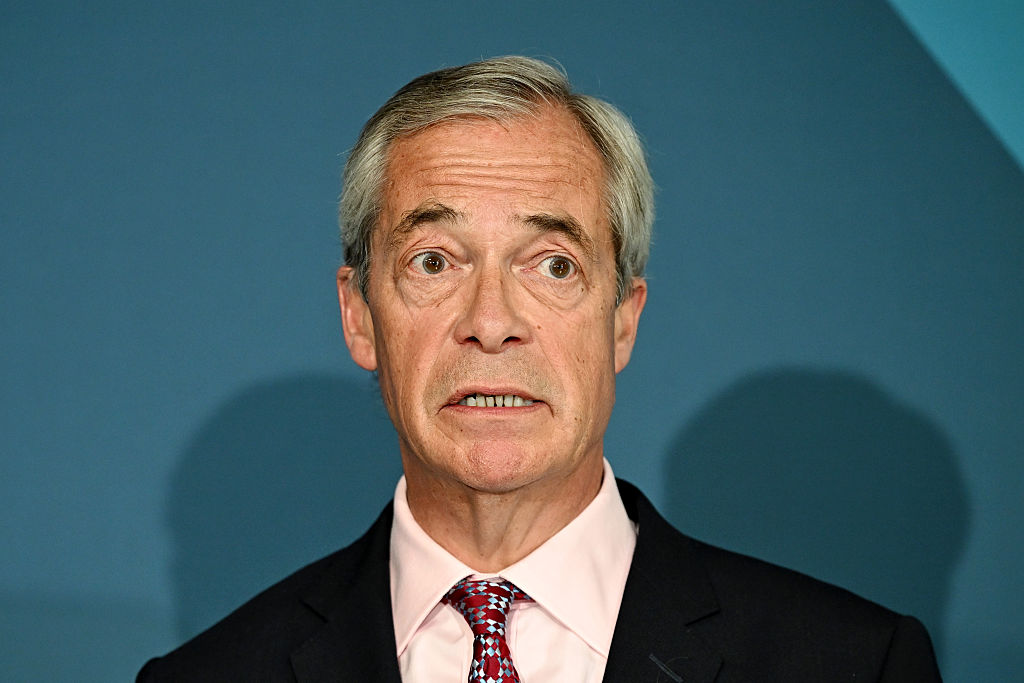
Nigel Farage is facing his biggest challenge since he became an MP two years ago after a string of revelations about his finances that could potentially force him to fight a by-election to retain his parliamentary seat.
Over the weekend, a Sunday Times Insight team investigation reported that Farage’s work had been financially supported by his longstanding adviser George Cottrell, a convicted criminal who served time in a US jail cell for wire fraud.
The support, which reportedly included security and staffing in the year before Farage became an MP in July 2024, was not declared to parliamentary authorities despite transparency rules that require MPs to declare benefits and gifts received in the 12 months before election.
The House of Commons’ code of conduct states clearly that new MPs, on taking their seats, must register all current financial interests and “any registerable benefits (other than earning) received in the 12 months before their election”. This must be done within one month of election so that it can be published in the publicly available Register of Financial Interests.

Reform UK says Farage has done northing wrong and that Cottrell’s support for Farage was in a “purely personal capacity” and therefore didn’t need to be declared. However this remains contested after further evidence emerged that Cottrell had used Reform UK branding on a business card, suggesting his activities were linked explicitly to the party.
This latest story follows the revelation from The Guardian in late April that Farage had received a personal gift of £5 million from the cryptocurrency investor Christopher Harborne which was similarly not declared on the grounds it was for Farage’s personal security. When he was recently pressed on the subject, Farage said “it’s not the public’s business”.
The Parliamentary Standards Commissioner has already opened an investigation into the Harborne gift and whether it broke Commons rules. Now there have been calls, most prominently from the Liberal Democrats, for an additional or expanded inquiry taking in the alleged Cottrell gifts.
This might sound like an arcane process, but it could plausibly lead to Farage being forced to fight a parliamentary by-election before the next general election. Here is a quick guide to how that could happen.
First, the Standards Commissioner will draw up their report on the affair under consideration. The commissioner is an independent officer of the Commons and the current holder of the post is Daniel Greenberg, a lawyer. Greenberg decided to open an investigation into the Harborne gift but it remains to be seen whether he will also investigate the Cottrell allegations published by the Sunday Times.
Second, when Greenberg’s investigation is complete, he will submit his report to the parliamentary Committee on Standards. This committee will then decide whether it accepts the result of the investigation. In the hypothetical scenario that Farage is judged to have broken rules, the committee will then have to decide whether it agrees with the commissioner’s verdict. If it does, the committee will then be left to impose a sanction.
The committee is currently chaired by Alberto Costa, a Conservative MP. It comprises two Conservative MPs, 4 Labour MPs and one Liberal Democrat. These seven MPs, chosen by the Commons to enforce standards, serve on the committee alongside seven lay members.
The lay members are intended to ensure the political independence of the committee’s decisions. They have full voting rights and are hired through a conventional recruitment process. Successful applicants usually have career backgrounds dealing with regulatory issues. The current lay members are: two doctors, two former police officers, two solicitors and a former bank executive.
But how would this process get us to a by-election? Well, bearing in mind that we are in the realm of hypotheticals and that Farage could appeal any decision he didn’t like, there are a range of possible sanctions for an MP who is found to have broken Commons rules. The most consequential would be a suspension order. If the committee were to suspend Farage from the House for 10 sitting days or more, this would then trigger a recall petition in his Clacton constituency
This petition, run by the local returning officer in the constituency for six weeks, would trigger a by-election if it succeeded. In order to succeed the petition would need to gather the signature of 10 per cent of eligible registered voters in the constituency. In Clacton, that would require roughly 7,800 constituents to sign the recall petition.
That threshold is lower than the number of Labour, Lib Dem and Green voters in the constituency at the last election combined, so we can assume that with any concerted effort the threshold could be reached by Farage’s political opponents.
There have been six recall petitions since the Recall of MPs Act was passed in 2015. In only one case has the 10 per cent threshold not been passed (North Antrim in 2018, when Ian Paisley avoided a by-election because fewer than 10 per cent of eligible voters signed). Boris Johnson faced a recall petition after the committee ruled against him in 2023, but he resigned before the process could be completed.
In all five other cases, the threshold was met a by-election was triggered. In only one instance did the sitting MP stand in the by-election in an attempt to hold onto their seat (this was the Conservative MP Chris Davies, who stood and lost in Brecon and Radnor in 2019). That means no MP who has ever been successfully recalled has managed to keep their seat in the Commons. If the standards process were to develop unfavourably for Farage, the odds would be against him.
And yet, as the leader of the party currently leading the opinion polls, Farage would be a much higher profile victim of the standards committee than all of the previous examples (even Johnson was already an ex-PM before he faced the committee).
If Farage chose to fight a hypothetical by-election, he would likely win comfortably given his 2024 result in Clacton outperformed Reform UK nationally and the party has only grown in support since then.
We could then face the unprecedented spectacle of the two major candidates hoping to form the next government, Farage and Andy Burnham, heading into a general election having both won mid-term parliamentary by-elections in which they outperformed their parties’ national polling score.
After a decade in which party leaders have been brutally chopped and changed by their fickle parliamentary colleagues, we might be on the verge of having two party leaders who are more hegemonic than any in living memory, with active demonstrations of public support at the ballot box to prove it.
While Farage’s opponents will hope that this scandal develops unfavourably for him, the ultimate result of a victory in Clacton might only strengthen his position as one of the most immovable characters in British politics.
One Reform source put it me thus after the last few difficult days and weeks: “If we have learned anything from British politics over the last 30 years, the lesson is never underestimate Nigel.”
[Further reading: Nigel Farage’s aura loss]
Content from our partners



Related

Join the debate
Subscribe here to comment